
An air navigation service provider was upgrading a remote radio site. Nothing unusual, just replacing aging analog units with new VoIP radios. Routine work. The kind of swap that happens across ANSP networks regularly as analog infrastructure reaches end of life.
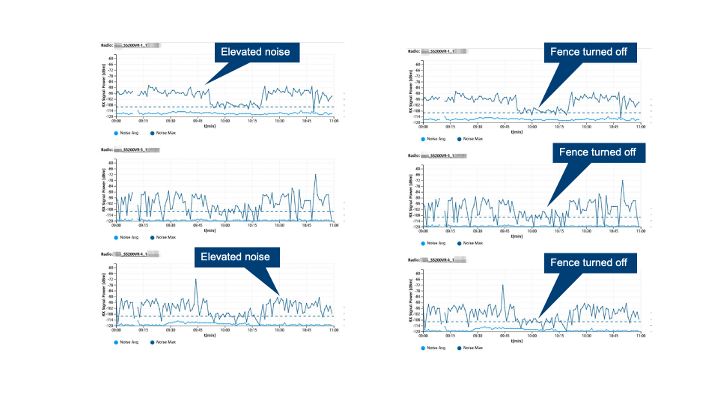
Within hours of the new radios going live, the monitoring system flagged elevated noise across multiple frequencies at that site. Engineers drove out to investigate. What they found wasn’t a faulty installation or a defective component. It was an electric fence.
A horse pasture sat adjacent to the radio installation, and a wiring fault in the fence had been leaking electromagnetic interference into the RF environment, silently, and for what appeared to be a very long time. Switching off the fence dropped the noise floor immediately, visible in real time on the monitoring dashboard. The source was confirmed. The horses were officially notified. They had three weeks to resolve the situation 🙂
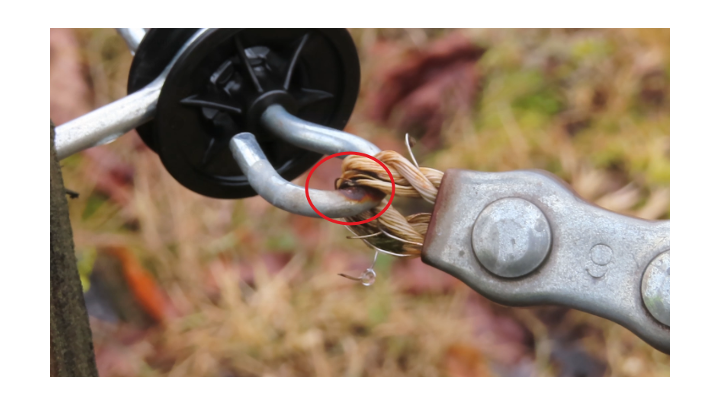
It’s a memorable story. But the part worth paying attention to isn’t the comedy of livestock receiving formal notice, it’s what the story reveals about the nature of RF interference in ATC environments. The interference had been there the whole time. No one had known. The old analog radio had simply absorbed it without any visible indication that something was wrong.
The moment a modern VoIP radio and a proactive monitoring system went into service, the problem became visible for the first time.
In ATC, monitoring has traditionally focused on network health – keeping infrastructure components up and in sync – and more recently on VoIP quality metrics: Mean opinion score (MOS), jitter, packet loss, and latency. These metrics matter, and the industry has invested significantly in tracking them.
But the radio interface, the RF layer where air-to-ground communication actually begins, operates under a different set of conditions. It sits at the edge of the network, exposed to the physical environment in ways that IP infrastructure simply isn’t. Background noise can rise gradually over days or weeks. Interference can appear and disappear in patterns tied to time of day, nearby equipment cycles, or weather. A single affected frequency at a single site can quietly degrade without triggering any obvious alarm, until a controller mentions that something sounds off, or a spot-check reveals that signal quality has been deteriorating for some time.
The tools traditionally used to investigate RF problems – spectrum analyzers, directional antennas – are powerful. But they offer depth at the expense of breadth. They give a detailed view of one location at one moment in time. What they don’t provide is simultaneous visibility across an entire network of sites, or the ability to correlate behavior across frequencies and locations without dispatching a team and hoping the interference is still present when they arrive.
Without network-wide RF visibility, the default operating mode is reactive: wait for a complaint, investigate, and hope the problem is still reproducible.
RSSI stands for Received Signal Strength Indicator – a measure of the power level at the receiving end of a radio link. Monitoring it continuously, across every site and every frequency, gives ANSPs something that point-in-time diagnostic tools cannot: a persistent, network-wide picture of the RF environment as it actually behaves over time.
In practical terms, this means:
That last point is easy to overlook. RF interference problems frequently have a rhythm. A solar panel inverter that generates noise during peak generation hours. A piece of nearby equipment that degrades over weeks. Without months of historical data available for review, these patterns are nearly impossible to detect, even when the underlying issue has been affecting signal quality for a long time.
At one site, controllers reported that the emergency frequency, 121.500 MHz, was showing open squelch without any aircraft transmissions to account for it. Persistent, disruptive, and given the safety significance of the emergency frequency, not something that could wait for a broad-area investigation.
Because continuous RSSI monitoring had already been capturing data for that channel, engineers didn’t have to start from scratch. The data showed clearly that background noise at that specific receiving station had been rising above the squelch threshold, causing the receiver to open even in the absence of a signal. The problem was localized to a single site, not a wider network issue.
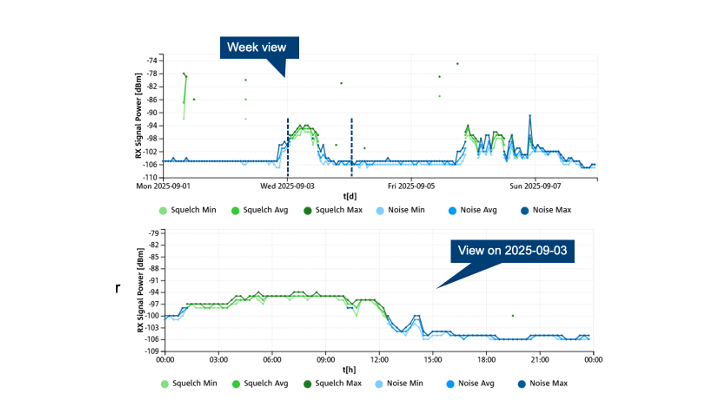
That kind of specificity changes the economics of field investigation considerably. The difference between “something seems wrong with the emergency frequency” and “the noise floor at site X has been exceeding the squelch threshold, here’s the trend data” is the difference between a broad search and a targeted deployment. In this case, the investigation led directly to a defective power supply near the receiver. Replacing it resolved the problem.
The horse pasture story points to something that ANSPs are increasingly encountering as analog radio infrastructure is replaced with modern VoIP equipment: upgrades don’t only improve capability, they also illuminate what was already there.
Older analog radios were never designed for remote RF monitoring. They did their job, but they did it in silence. There was no mechanism for capturing noise floor data, no way to track squelch events over time, no remote view of what the RF environment looked like at any given site. Problems that existed below the threshold of obvious complaint could persist indefinitely.
When a new VoIP radio with RSSI monitoring capability goes into service, that silence ends. The monitoring system can see what the old equipment couldn’t report. Interference that may have been affecting signal quality for years, subtly, without a clear symptom that could be traced back to an RF source, becomes detectable and, more importantly, fixable.
Every analog-to-VoIP transition across an ANSP network is an opportunity to extend RF visibility to sites that have never had it. The question is whether that opportunity is built into the upgrade process or treated as an afterthought.
The real value of RSSI monitoring becomes clear at scale, not at a single site, but across an ANSP’s entire infrastructure.
When signal quality data from every frequency at every site flows into a centralized dashboard, engineers can assess the state of the whole network at a glance. Normal sites look normal. Anomalies stand out. It becomes immediately apparent whether an issue is isolated to one location or following a pattern across multiple sites or shared frequencies.
That bird’s-eye view changes how field teams operate. Instead of dispatching engineers in response to vague reports or gut feeling, teams go out with specific information: which site, which frequencies, what the noise pattern looks like over time, and whether the issue is new or has been building for weeks. The difference between “go check site X, something seems off” and “the noise floor on these three frequencies at site X has been elevated every afternoon for two weeks” is the difference between an open-ended search and a targeted intervention.
One large ANSP that deployed continuous RSSI monitoring across its full network described the shift as moving from reactive troubleshooting to proactive management, resolving signal quality issues before they reach operational impact, with visibility into RF infrastructure that simply hadn’t existed before. Engineering teams that previously had no way to assess network-wide RF status can now do so in seconds.
The electric fence, the defective power supply, the emergency frequency with unexplained open squelch, none of these problems were dramatic in themselves. What made them manageable was visibility. The ability to see the RF environment continuously, across the whole network, and to bring data to an investigation rather than starting one blind.
RF interference in ATC is unpredictable and often invisible by default. It doesn’t correlate neatly with controller complaints or maintenance cycles. It can affect safety-critical frequencies without triggering any obvious alarm in the systems that sit above the radio layer.
The same shift toward proactive monitoring that has reshaped how ANSPs manage VoIP voice quality is now taking hold at the RF layer. The tools are there. The question for ANSPs is whether the radio environment gets treated as something to be monitored continuously, or something to be investigated only once a problem has already made itself known.