ATC communications transition to IP, unlocking operational advantages but introducing new monitoring challenges. In dynamic, mission-critical environments, ANSPs need real-time visibility into every call and channel, because degraded voice quality in ATC is a safety risk, not just a service issue.
Monitor every live call across your entire IP network
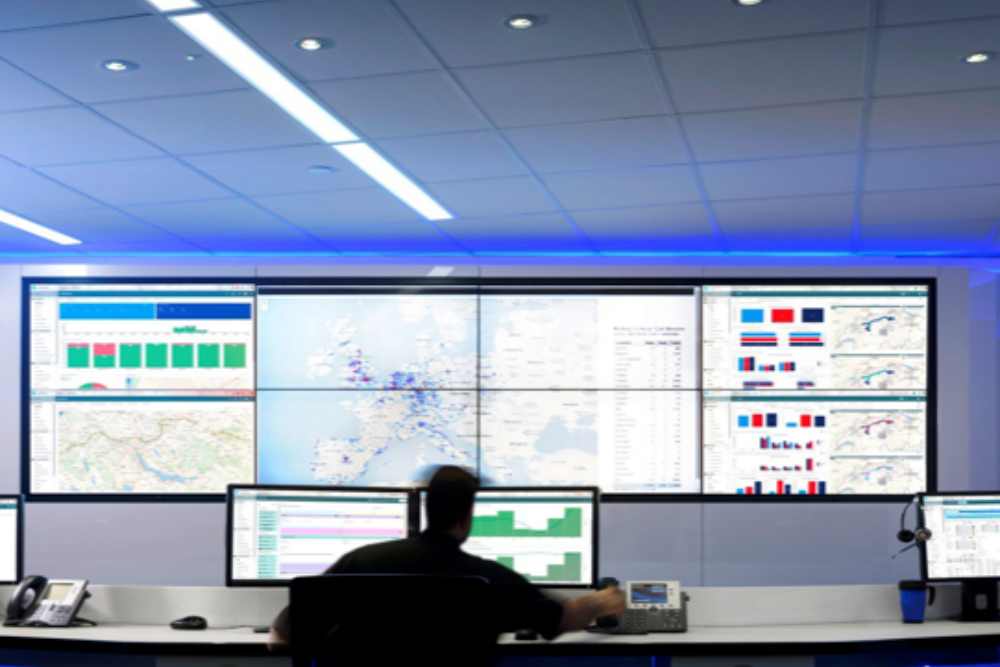
ATC voice monitoring can’t rely on periodic test calls or user complaints. By the time a controller or a pilot reports an issue, it’s already a safety risk. Effective monitoring passively observes all live air-to-ground and ground-to-ground communications in real time, without adding any load to the operational network. Every call, every channel, every site, is continuously observed, with nothing left in the dark.
Detect the threats your other tools miss
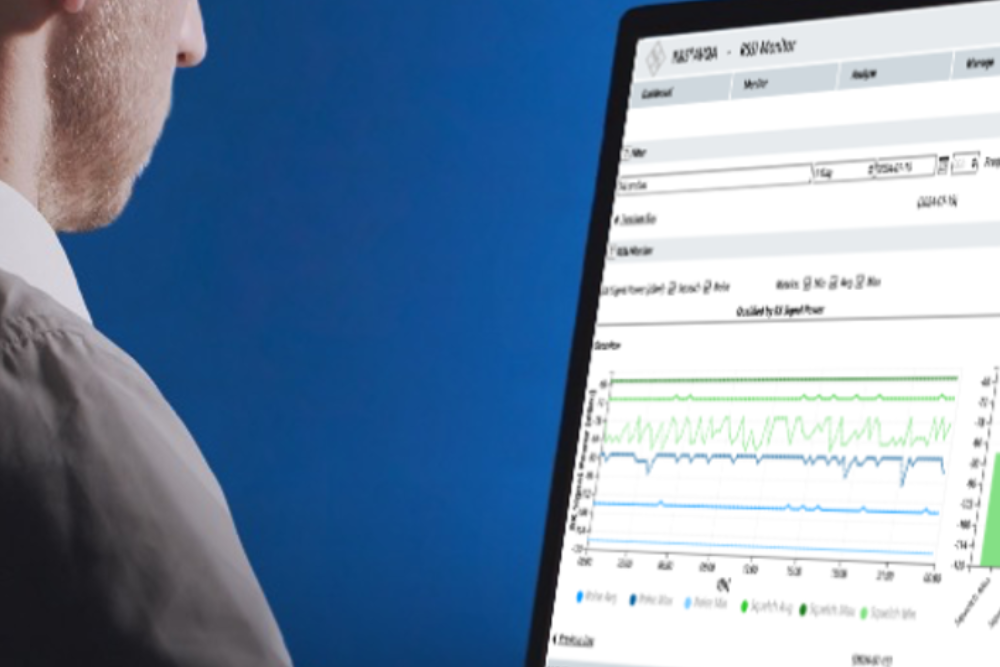
Standard network monitoring tools weren’t designed for ATC voice, and that gap is bigger than most ANSPs realize. Network tools poll the infrastructure every few minutes. A five-second window of severe interference during a critical instruction is gone before the next polling cycle even runs. Device monitors tell you whether a radio is online, not whether a pilot can understand it. Active test calls show snapshots, not the ongoing stream of live communications. None of these tools is aware of RF parameters – RSSI levels, squelch events, noise floor variations, or ghost calls are completely invisible to them. Purpose-built ATC voice monitoring closes all of these gaps, continuously and without intruding on live operations.
Pinpoint root causes fast, across any vendor
In a distributed IP environment with multiple vendors and network segments, identifying the source of a problem can take months with conventional tools. Automatic root cause detection reduces that to minutes. Whether the issue lies in a specific radio site, a network segment, or a third-party provider, teams get a clear answer, and the data to back it up, regardless of the underlying infrastructure or vendor mix.
Meet ED-136 requirements with confidence
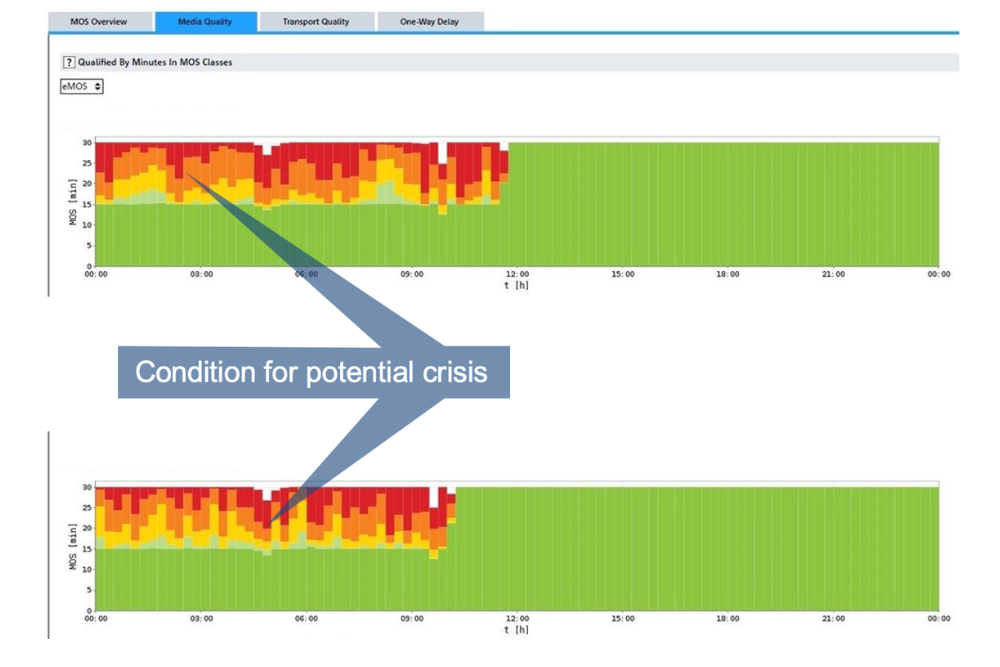
EUROCAE ED-136 mandates a MOS above 4.0 for all ATC voice communications. Measuring voice quality accurately in ATC requires RTP timeslicing, aligned with the short, PTT-based rhythm of ATC transmissions, and continuous measurement even during idle times using Expected MOS (eMOS). This gives ANSPs a regulation-ready picture of service quality that can be reported on at any time.
When monitoring prevents the worst-case scenario
At a European ANSP, controllers reported they couldn’t transmit on a specific frequency. Standard procedure was followed, backup radios were activated, equipment was restarted, and the immediate issue appeared resolved. But deeper analysis told a different story: eleven radios across multiple sites were experiencing severe jitter and packet loss. Two of them were serving the emergency frequency; both the primary and the backup transmitters were effectively unusable. Had an actual in-flight emergency occurred during that window, controllers would have had no way to respond. Comprehensive, real-time monitoring caught what a simple restart never could.
What comprehensive ATC voice monitoring should cover
Network Performance
Regulatory & Compliance
• Packet loss, jitter, burst loss, and one-way delay per call and per segment
• Transport policy validation (DSCP, VLAN) to verify QoS is applied correctly
• Root cause isolation down to specific network segments or radio sites
• Continuous ED-136 and ED-137 conformance monitoring
• Compliance reporting ready for civil aviation authorities at any time
• Full call history stored and accessible for audit and troubleshooting
Voice Quality
Radio & RF
• MOS measurement using RTP timeslicing, not call-level averages
• Expected MOS (eMOS) during idle times, when no audio is transmitted
• Bad Minute Indicator (BMI) tracking segments where quality drops
• Squelch event analysis to detect ghost calls and simultaneous transmissions
• RSSI and noise floor monitoring to identify interference sources
• Air-to-ground channel health across all operational frequencies
Ready to explore our unique approach to voice service monitoring and analytics?